
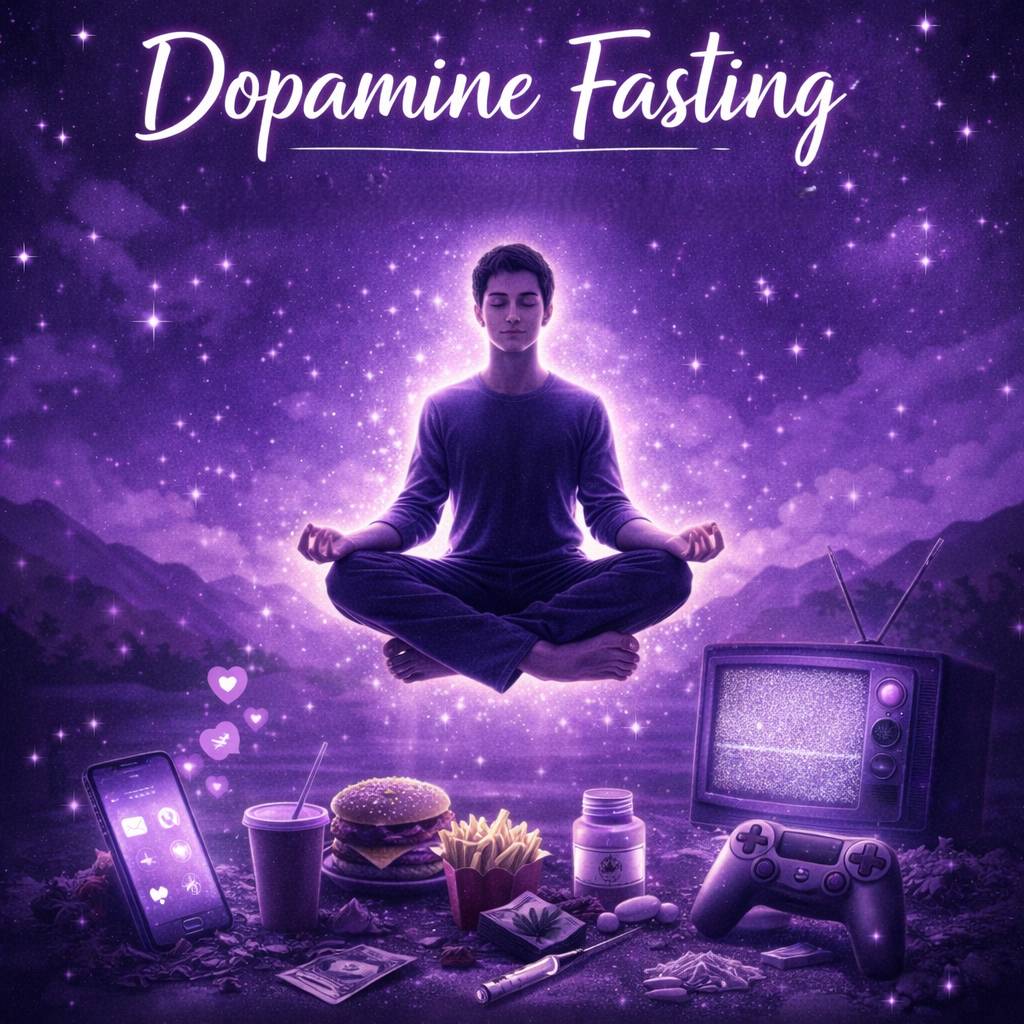
In our hyper-connected world, we're constantly bombarded with stimuli designed to capture our attention and trigger dopamine release. From social media notifications to streaming services, our brains are in a near-constant state of seeking the next reward. Dopamine fasting offers a way to step back and reset.
What is Dopamine Fasting?
Dopamine fasting is a practice that involves temporarily reducing or eliminating activities that trigger excessive dopamine release. The goal isn't to literally fast from dopamine (which is impossible and would be harmful), but rather to take a break from behaviors that have become compulsive or overstimulating.
The term was popularized by Dr. Cameron Sepah, a psychiatrist at UCSF, who based the practice on cognitive behavioral therapy principles. It's designed to help people regain control over impulsive behaviors.

"It’s a modern necessity to own a phone, but to be owned by the phone is a modern sickness."
How Dopamine Works
Dopamine is a neurotransmitter that plays a crucial role in our brain's reward system. It's released when we experience pleasure, but more importantly, it's released in anticipation of pleasure. This is why checking your phone can feel so compelling—your brain is anticipating a reward.
When we repeatedly engage in high-dopamine activities, our brains can become desensitized, requiring more stimulation to feel the same level of satisfaction. This is known as tolerance.
How to Practice Dopamine Fasting
The Gradual Approach
- Identify your triggers: What activities do you engage in compulsively? Common ones include social media, video games, pornography, emotional eating, shopping, and gambling.
- Start small: Begin with 1-4 hours of fasting from your identified triggers.
- Schedule regular fasts: Dr. Sepah recommends:
- 1-4 hours at the end of each day
- One weekend day per week
- One full weekend per quarter
- One full week per year
- Replace with low-stimulation activities: Walking, journaling, meditation, or simply sitting with your thoughts.
What to Avoid During a Fast
- Social media and internet browsing
- Video games and streaming
- Music (some practitioners include this)
- Junk food and emotional eating
- Shopping (especially online)
- Pornography
- Thrill-seeking activities
What You Can Do
- Take walks in nature
- Meditate or practice mindfulness
- Journal or write
- Have meaningful face-to-face conversations
- Engage in light exercise
- Read physical books
- Prepare and eat simple meals mindfully
Benefits
- Reduced compulsive behavior: Breaking the cycle of stimulus-seeking helps regain control.
- Increased appreciation: Simple pleasures become more enjoyable when you're not constantly overstimulated.
- Better focus: Reduced distractions can improve concentration and productivity.
- Improved self-awareness: Time without stimulation allows for reflection and introspection.
- Better sleep: Reducing screen time and stimulation, especially in the evening, can improve sleep quality.
- Emotional regulation: Learning to sit with discomfort rather than immediately seeking relief builds emotional resilience.
Caveats
- Not a literal dopamine fast: You cannot and should not try to eliminate dopamine. The name is somewhat misleading.
- Not a cure-all: This practice addresses behavioral patterns, not underlying mental health conditions.
- May be uncomfortable: Expect to feel bored, restless, or anxious initially. This is normal and part of the process.
- Not one-size-fits-all: What counts as overstimulating varies by person. Customize your approach.
- Extreme versions can be harmful: Avoid isolating yourself completely or avoiding all pleasure. The goal is moderation, not deprivation.
References
- Sepah, C. (2019). "The Definitive Guide to Dopamine Fasting 2.0"
- Harvard Health Blog: "Dopamine fasting: Misunderstanding science spawns a maladaptive fad"
- Volkow, N. D., & Morales, M. (2015). The brain on drugs: From reward to addiction. Cell, 162(3), 403-413.