
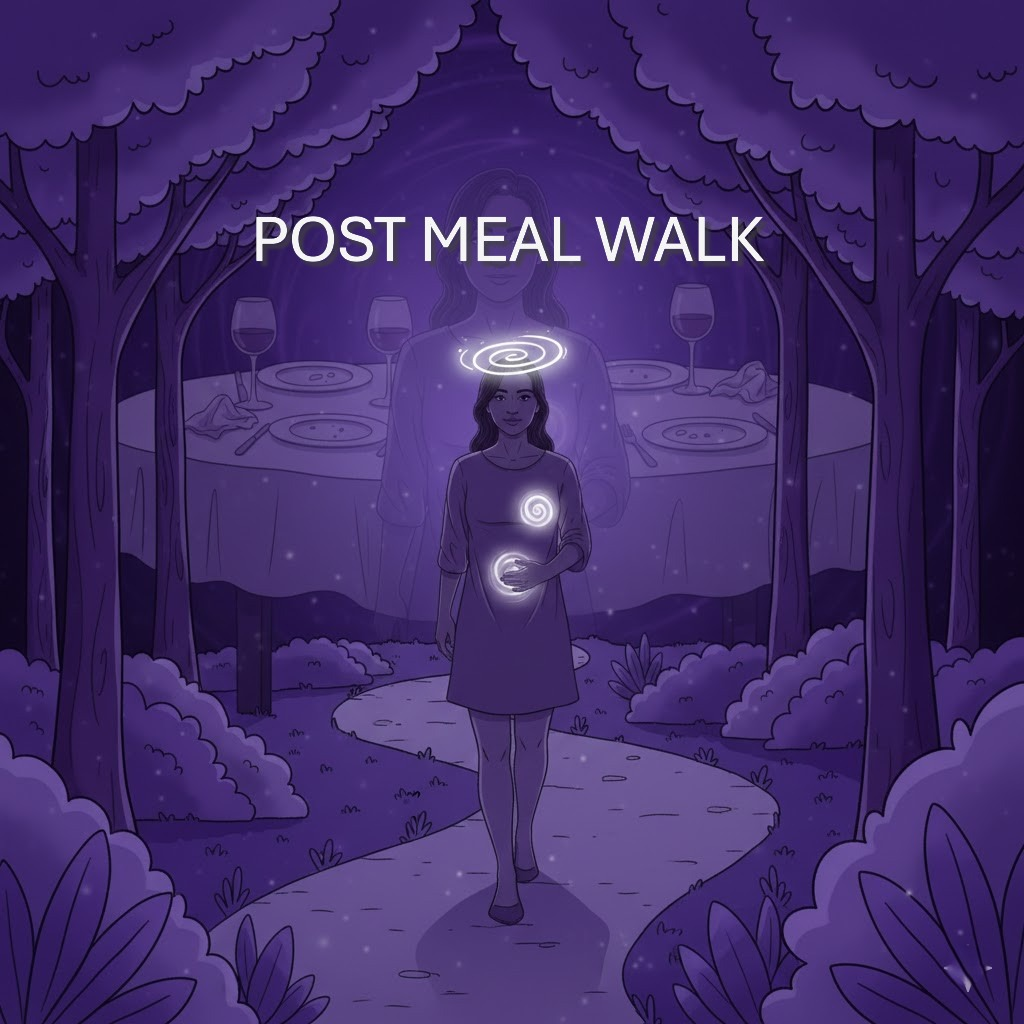
What if one of the most effective health interventions was free, required no equipment, and took only 10-15 minutes? Research increasingly suggests that taking a short walk after meals—especially after dinner—can have significant benefits for blood sugar control, digestion, and overall health.
Why Timing Matters
After eating, your blood glucose levels rise as your body processes the food. This is normal, but large or prolonged spikes can be problematic, especially for people with insulin resistance or diabetes. Physical activity, even gentle walking, helps your muscles absorb glucose from the bloodstream, reducing these spikes.
A 2022 meta-analysis found that walking within 60-90 minutes after eating was significantly more effective at blunting blood sugar spikes than walking at other times or remaining sedentary.

"The road to health is paved with good intestines!"
How to Practice
Basic Guidelines
- Timing: Start your walk 15-45 minutes after finishing your meal.
- Duration: Even 10-15 minutes provides benefits. Aim for 15-30 minutes if possible.
- Intensity: Light to moderate pace. You should be able to hold a conversation.
- Frequency: After any meal, but particularly after your largest meal of the day.
Making It a Habit
- Link it to an existing routine: "After dinner, I walk" is easier to remember than setting a specific time.
- Start small: Even a 5-minute walk is better than none. Build from there.
- Make it enjoyable: Walk with a partner, listen to a podcast, or explore your neighborhood.
- Plan for weather: Have indoor options ready (mall walking, stair climbing, indoor hallways).
- Use a reminder: Set a gentle alarm for 20 minutes after meals.
Alternatives to Walking
If walking isn't possible, other light activities can help:
- Standing and doing light housework
- Gentle stretching or yoga
- Light resistance exercises (bodyweight squats, wall push-ups)
- Dancing to a few songs
Benefits
- Blood sugar management: Studies show post-meal walking can reduce glucose spikes by 30-50%.
- Improved digestion: Walking stimulates gastric motility, helping food move through the digestive system.
- Reduced bloating: Gentle movement can alleviate post-meal discomfort.
- Better sleep: An evening walk can support more restful sleep.
- Weight management: Burns calories and helps regulate appetite.
- Mental clarity: Movement after eating can counteract post-meal fatigue.
- Heart health: Regular walking supports cardiovascular function and blood pressure.
- Reduced risk of type 2 diabetes: Helps maintain insulin sensitivity over time.
The Research
Several studies highlight the effectiveness of post-meal activity:
- A 2016 study in Diabetologia found that three 10-minute walks after meals were more effective at reducing blood sugar than one 30-minute walk at any other time.
- Research published in Sports Medicine (2022) confirmed that light walking after eating significantly reduces postprandial glucose, with benefits observable even from just 2-5 minutes of activity.
- Studies in older adults show particular benefits for those at risk of type 2 diabetes.
Caveats
- Intensity matters: Vigorous exercise immediately after eating can cause discomfort. Keep it gentle.
- Listen to your body: If you experience cramping or nausea, wait a bit longer after eating before walking.
- Not a substitute for medical advice: If you have diabetes or other health conditions, consult your healthcare provider about integrating this practice.
- Safety first: Walk in safe, well-lit areas, especially in the evening.
- Don't skip meals to walk: The benefit comes from the combination of eating and then moving, not from eating less.
References
- Reynolds, A. N., et al. (2016). "Advice to walk after meals is more effective for lowering postprandial glycaemia in type 2 diabetes than advice that does not specify timing." Diabetologia.
- Buffey, A. J., et al. (2022). "The Acute Effects of Interrupting Prolonged Sitting Time in Adults with Standing and Light-Intensity Walking on Biomarkers of Cardiometabolic Health." Sports Medicine.
- American Diabetes Association - Blood Glucose and Exercise